
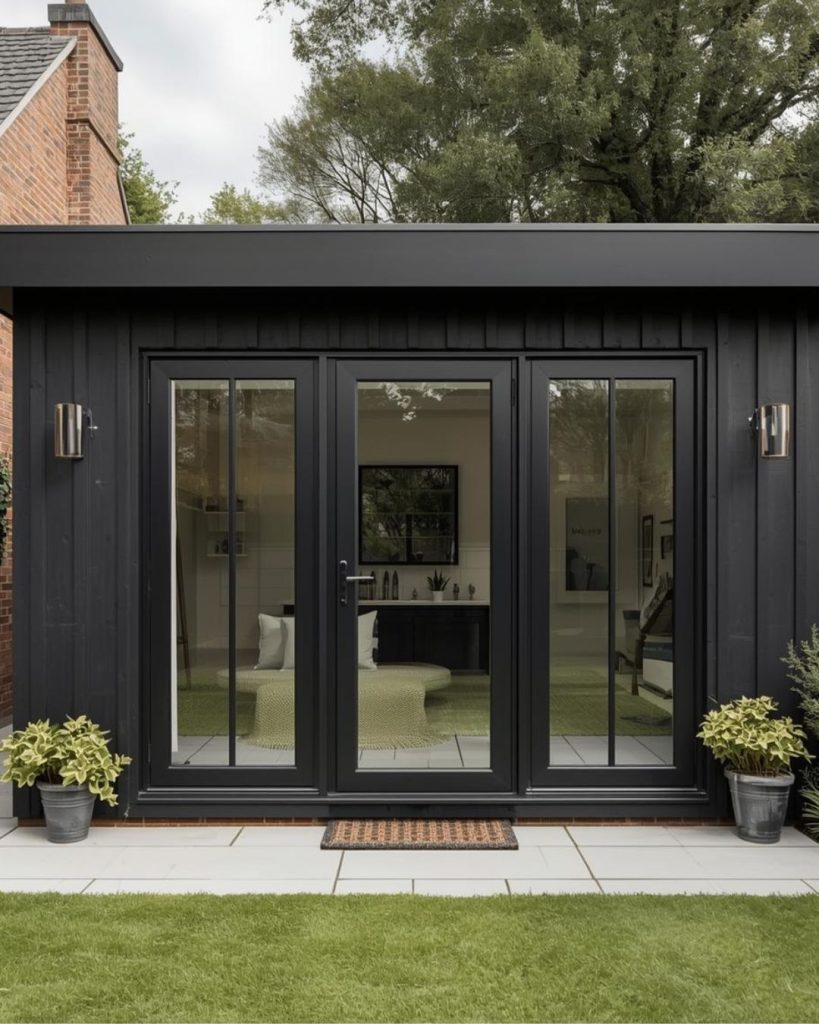
10 Ways to Use a Garden Room in High Wycombe
A garden room is one of those home improvements that sounds straightforward until you start thinking about it properly — at which point most homeowners realise it is considerably more versatile than they initially assumed. The question is not really whether a garden room would be useful. For most properties in High Wycombe with a decent rear garden, the answer to that is almost certainly yes. The more interesting question is what you would actually use it for.
High Wycombe sits in a part of Buckinghamshire where a significant proportion of homeowners commute into London or work across the M40 corridor — and that working pattern, combined with the town’s mix of larger detached properties in Penn and Tylers Green and the more compact semis of Downley and Micklefield, means garden rooms here tend to serve a specific, practical purpose rather than being purely aspirational.
Here are ten of the most popular uses we see across the High Wycombe area, and what makes each one work well.
1. Home Office
The home office is the most requested garden room use across High Wycombe by some distance, and it is not hard to see why. A well-built, properly insulated garden room creates a genuine separation between work and home life that a spare bedroom conversion simply cannot match. You leave the house to go to work. You come back when you are done. The psychological boundary that creates is genuinely valuable, particularly for anyone doing focused work that requires uninterrupted concentration.
For High Wycombe commuters who have moved to hybrid working — spending two or three days a week at home — a garden office also makes the home more functional for the rest of the family on the days they are working. The house stays a house rather than an office that people happen to live in.
Specification matters here. A garden office used year-round needs proper insulation, reliable heating, good natural light, and enough electrical capacity for screens, printers, data connections and anything else the role requires. Get the spec right and it is a room you will use every day. Get it wrong and you will be back in the spare bedroom by November.
2. Garden Gym
A home gym in a garden room is one of the most cost-effective fitness investments available once you factor in ongoing gym membership fees. A well-specified garden gym with rubber flooring, mirrors, decent ventilation and the right power supply for equipment can be built and equipped for a fraction of what a decade of gym membership costs — and it is available at 6am on a Tuesday without the commute.
For properties in the larger detached housing across Penn Road, Seer Green and the Chiltern villages, garden gyms are increasingly common and increasingly well specified — built to the same standard as the house rather than as a shed with a treadmill in it. Ventilation is the specification element most often underestimated — a gym that cannot shift heat and humidity becomes unpleasant to use very quickly.
3. Children’s Playroom
As children get older, the battle for living space intensifies. Toys, gaming equipment, craft materials, and increasingly the paraphernalia of teenage life all compete for room inside the house. A garden room dedicated to the children removes that competition — and gives them a space that genuinely feels like theirs rather than a corner of the living room that has been reluctantly surrendered.
The specification for a children’s playroom is more forgiving than a home office — insulation still matters for year-round use, but the electrical requirements are simpler and the internal fit-out can be relatively basic. The main consideration is connectivity — wifi that reaches the garden room reliably is non-negotiable for most children over the age of about eight.
4. Music Studio or Practice Room
High Wycombe and the surrounding Chiltern area has a surprisingly active music scene, and a garden room used as a practice space or recording studio is a request we see regularly — particularly from homeowners in semi-detached or terraced properties where practising instruments inside the house is a significant imposition on neighbours.
Acoustic treatment is the key specification element for a music use. Standard garden room insulation helps with thermal performance but does not significantly reduce sound transmission. A proper acoustic build — staggered stud walls, resilient fixings, mass-loaded vinyl, acoustic ceiling suspension — adds cost but makes the difference between a room that keeps the noise in and one that does not. If acoustic performance is important, it needs to be designed in from the outset rather than added as an afterthought.
5. Art Studio or Creative Space
Natural light is the defining specification requirement for an art studio, and a garden room can deliver it in ways that a room inside the house rarely can. North-facing rooflights provide consistent, diffused light without direct sun — the preferred lighting for most fine art work. South-facing glazing gives abundant light but requires some management of direct sun to avoid glare and heat gain in summer.
For homeowners in High Wycombe who paint, sculpt, throw ceramics or work in any other medium that benefits from dedicated space and good light, a garden room purpose-built as a studio is transformative. The separation from the house also means materials, mess and work in progress can be left out between sessions without affecting the rest of the home.
6. Treatment Room or Consultation Space
For anyone running a small professional practice from home — a therapist, osteopath, counsellor, beauty therapist or similar — a garden room provides a client-facing space that is separate from the domestic environment. Clients arrive, use a space that feels professional and dedicated, and leave without entering the main house.
This is an increasingly popular use across High Wycombe’s professional residential areas. The key considerations are access — clients need to reach the garden room without walking through the house — and the building’s compliance with any relevant professional body requirements around clinical space. Planning permission is worth checking for this use as it can constitute a change of use in some circumstances.
7. Teenage Den
The teenage version of the children’s playroom — but with different priorities. Privacy, connectivity, and a space that feels genuinely independent rather than parental-approved are the main requirements. A well-built garden room with good insulation, reliable wifi, comfortable seating and enough power for gaming and media equipment gives teenagers the space they want while keeping the main house liveable for everyone else.
For families in the larger properties across Tylers Green, Loudwater and Flackwell Heath where garden size allows it, a teenage den is one of the most practically useful garden room applications — particularly in the years when having a separate space reduces household friction considerably.
8. Home Cinema or Media Room
A garden room used as a dedicated home cinema or media room benefits from exactly the attributes that make it less suitable for other uses — no windows on three sides, solid construction, and separation from the rest of the house. The acoustic properties of a well-built garden room lend themselves well to immersive audio, and the ability to control light completely makes for a better picture quality than any room inside the house where blackout is never quite total.
The electrical specification needs planning carefully — a projector or large screen, surround sound amplifier and associated equipment puts meaningful demand on the circuit. Getting this right at the first fix stage is considerably easier than retrofitting it later.
9. Hobby Room or Workshop
A dedicated space for hobbies that generate mess, noise or equipment that does not belong in the main house is one of the most straightforward cases for a garden room. Model making, woodworking, painting miniatures, sewing and upholstery, restoration projects — these are all activities that benefit from a permanent, dedicated space where tools and materials can be left out and work in progress can remain undisturbed between sessions.
For a hobby workshop, the specification priorities are power — potentially a lot of it for power tools — ventilation, and a durable floor finish that can take some abuse. The thermal insulation requirements are less demanding if the room is used irregularly, though a basic level of insulation still makes the space significantly more comfortable in the colder months.
10. Guest Accommodation Annex
A fully insulated garden room specified to a higher standard — with a shower room, kitchenette, and sleeping space — functions as a self-contained guest suite that gives visitors genuine privacy and independence. This is particularly relevant for larger properties in High Wycombe and the surrounding Chiltern villages where hosting extended family or guests for several nights at a time is common.
It is worth noting that using a garden room as permanent self-contained living accommodation typically requires planning permission and building regulations approval — the permitted development rules that cover most garden rooms do not extend to habitable sleeping accommodation. A guest annex used occasionally for visiting family is a different proposition to a permanent lettable unit, but it is worth taking advice before proceeding if the intended use involves regular occupation.
A well-built guest suite is one of the higher-specification garden room projects and is priced accordingly — but as an addition to a family home in a part of Buckinghamshire where property values support the investment, it is one that tends to add meaningful value.
Getting a Quote in High Wycombe
Whatever you are planning to use it for, the starting point is a conversation about what the room needs to do and what the right specification looks like for that use. If you are based in High Wycombe, Beaconsfield, Marlow, Amersham, Princes Risborough or anywhere across south Buckinghamshire, get in touch and we will come out to look at your garden and talk through your options. No obligation, no pressure.